
Services
Rolfing® Structural Integration
A Systematic Approach to Posture, Movement, and Whole-Body Integration
Rolfing® Structural Integration is a specialized form of bodywork and movement education developed by Dr. Ida P. Rolf.
Rather than focusing exclusively on a painful or restricted area, Rolfing® looks at how the different parts of the body relate to one another through the connective-tissue system, movement patterns, and gravity.
The work combines skilled hands-on touch with movement education to help the client develop greater awareness, freedom, and organization in the body.
Each person's needs are different, so sessions are adapted to the individual while remaining grounded in the principles of Rolfing® Structural Integration.
The Original Ten-Series
The Foundation of Rolfing® Structural Integration
The Original Ten-Series is the traditional sequence developed by Dr. Ida P. Rolf and remains the foundation of Rolfing® Structural Integration.
Rather than repeatedly working on the same painful area, the Ten-Series progresses through the body in a specific sequence.
Each session has a particular emphasis while contributing to the organization developed in the sessions before it.
The series gradually addresses relationships throughout the body, including the feet, legs, pelvis, spine, rib cage, shoulders, neck, and head.
The purpose is not simply to make individual muscles feel looser.
It is to progressively work with the body's structural relationships and movement patterns so that the body can become more integrated as a whole.
Why Ten Sessions?
The Ten-Series is designed as a progressive process.
One session prepares the body for the next.
Rather than attempting to accomplish everything in one appointment, the series allows changes to develop progressively over time.
As Dr. Ida P. Rolf explained:
“You can't do ten hours in one hour.”
The Ten-Series is therefore not simply ten unrelated bodywork sessions. The progression from session to session is an important part of the method.
Individual Rolfing® Sessions
Not everyone begins with the Ten-Series.
Some clients are interested in addressing a particular movement concern, posture issue, athletic goal, or area of physical restriction.
An individual session allows the work to be tailored to the person's current needs while still using the principles of Rolfing® Structural Integration.
For people who have already completed a Ten-Series, individual sessions can also provide continued structural and movement integration.
Rolfing® Movement Education
Rolfing® is not exclusively hands-on bodywork.
Movement education is an important part of the process.
During sessions, you may be asked to walk, breathe, move a particular part of your body, notice a sensation, or explore a different way of organizing yourself.
These experiences can help you become more aware of habitual movement patterns and discover alternatives.
The goal is to help you become an active participant in the process, rather than simply receiving bodywork passively.
Rolfing® for Athletes
Philip's background includes extensive experience working with athletes in a sports-medicine environment.
He has worked with people involved in:
- Running and endurance sports
- Powerlifting
- Martial arts
- Yoga
- Dance
- CrossFit
- Strength and conditioning
- Other competitive and recreational activities
Athletes place unique demands on their bodies.
Repetitive training, previous injuries, asymmetries, and highly developed movement patterns can all influence how the body organizes itself.
Rolfing® can be used to explore movement efficiency, coordination, range of motion, body awareness, and structural organization.
The goal is not simply to make an athlete more flexible.
It is to help the body move with greater coordination and adaptability.
Rolfing® Following Injury
Philip also has extensive experience working with people following injuries, including sports injuries and automobile accidents.
His clinical background includes hands-on experience with presentations such as:
- Back and neck pain
- Sciatica
- Whiplash
- Sprains and strains
- Tendon and ligament injuries
- Shoulder injuries
- Hip, knee, and foot problems
- Disc-related problems
- Joint replacements
- Postural compensations following injury
Rolfing® is not a replacement for medical care, physical therapy, or other appropriate treatment following an injury.
Instead, once medically appropriate, Rolfing® may provide another perspective on the structural and movement patterns that develop around an injury.
Rolfing® for Posture and Everyday Movement
You don't have to be an athlete or have an injury to benefit from learning more about how your body moves.
Years of sitting, standing, working at a computer, driving, repetitive activities, or simply developing habitual ways of moving can influence posture and movement.
Rolfing® looks at the body as an interconnected system rather than attempting to “straighten” one isolated area.
The goal is not to force the body into a perfect posture.
It is to help you develop a more adaptable relationship between your body, movement, and gravity.
What Happens During a Rolfing® Session?
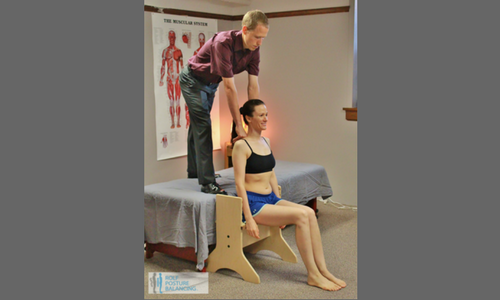
A session generally includes both hands-on work and movement education.
Depending on the session and your individual needs, you may:
Discuss how your body has been feeling and moving
Explore posture and movement
Receive hands-on work with connective tissues
Perform small, specific movements
Work with breathing and body awareness
Explore how different parts of your body relate to one another
Notice changes in movement before and after specific work
Communication is an important part of the process.
You remain an active participant, and you should communicate your comfort level and any concerns throughout the session.
How Rolfing® Is Different From Massage
Rolfing® Structural Integration is not a massage service.
Although both involve hands-on touch, they have different methodologies and goals.
Massage can encompass many different approaches, including relaxation, muscular work, sports massage, and deep-tissue techniques.
Rolfing® focuses on whole-body structural organization, connective-tissue relationships, movement education, and the body's relationship to gravity.
The difference is not simply how much pressure is used.
Rolfing® is defined by its structural and integrative approach—not by how deep the practitioner works.
How Rolfing® Is Different From Chiropractic
Rolfing® and chiropractic care approach the body differently.
Chiropractic care may focus on joint and musculoskeletal function.
Rolfing® focuses more extensively on connective-tissue relationships, structural organization, movement patterns, and integration within gravity.
Rolfing® does not adjust joints.
For some people, the two approaches can be complementary.
Who Can Benefit From Rolfing®?
People seek Rolfing® for many different reasons.
Some are dealing with persistent tension or movement restrictions.
Some are athletes looking to improve movement efficiency.
Some are recovering from an injury.
Some want to address longstanding postural patterns.
Others simply want to understand their body better and move with greater freedom.
You do not need to have a specific diagnosis or injury to explore Rolfing® Structural Integration.
Philip Clampitt's Clinical Experience
Practicing Since 2011
Philip's first decade in practice was spent working in-house in sports-medicine clinics under the direct supervision and collaboration of sports-medicine physicians.
His clinical experience includes hands-on work with 30+ conditions and presentations, as well as extensive experience working with athletes, injuries, automobile accidents, and everyday postural and movement concerns.
This experience provides a broad clinical perspective while Rolfing® Structural Integration remains the foundation of his practice.
Your First Step
If you're not sure whether Rolfing® is appropriate for what you're experiencing, you can contact Philip to discuss your goals and determine whether Rolfing® may be a good fit.
Rolf Posture Balancing
Carmel, Indiana
Bloomington, Indiana
812-583-1433
jp_clampitt@yahoo.com
Accepting New Clients